|
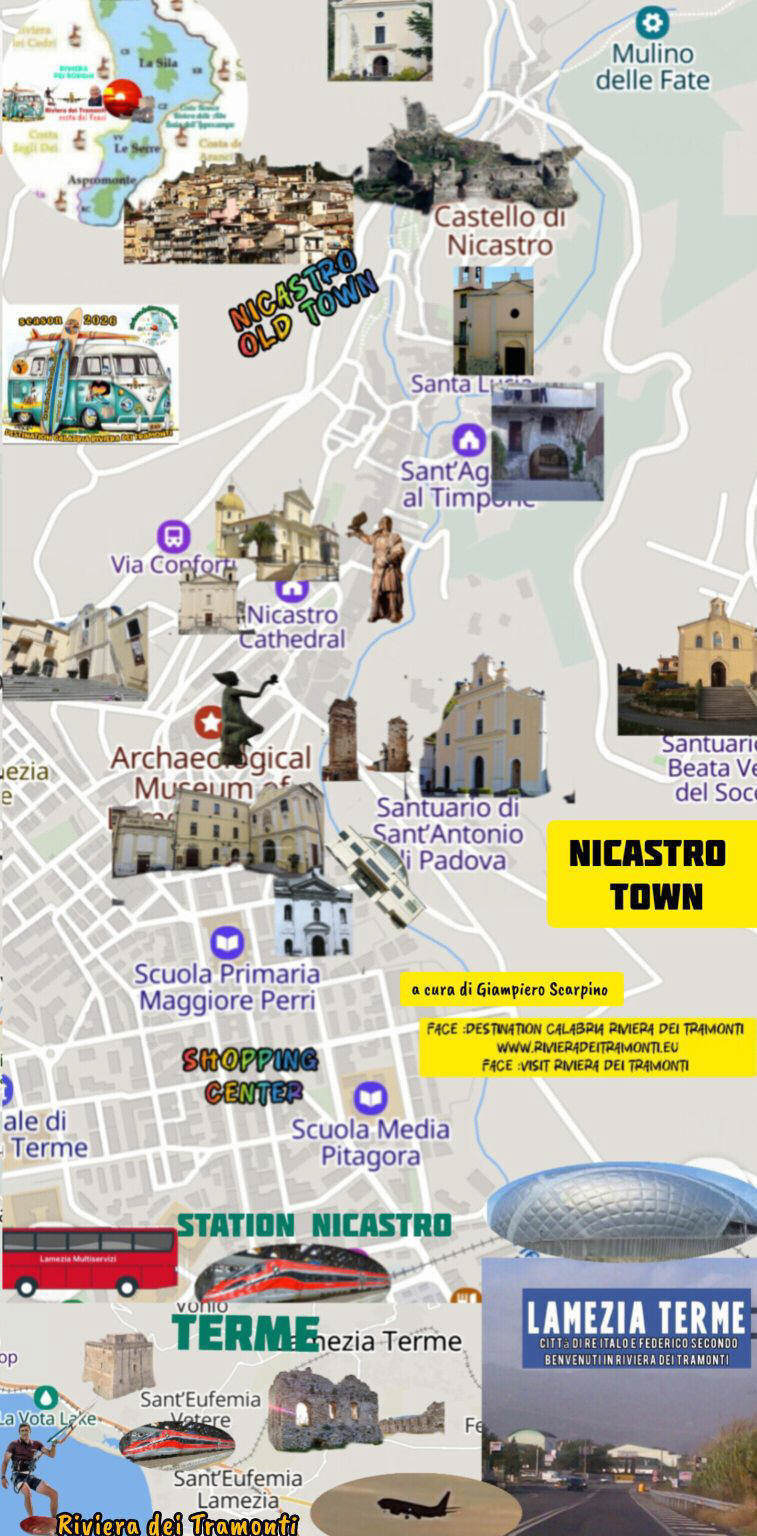
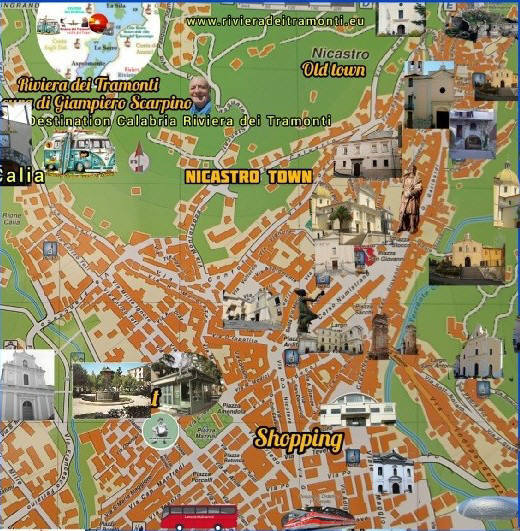
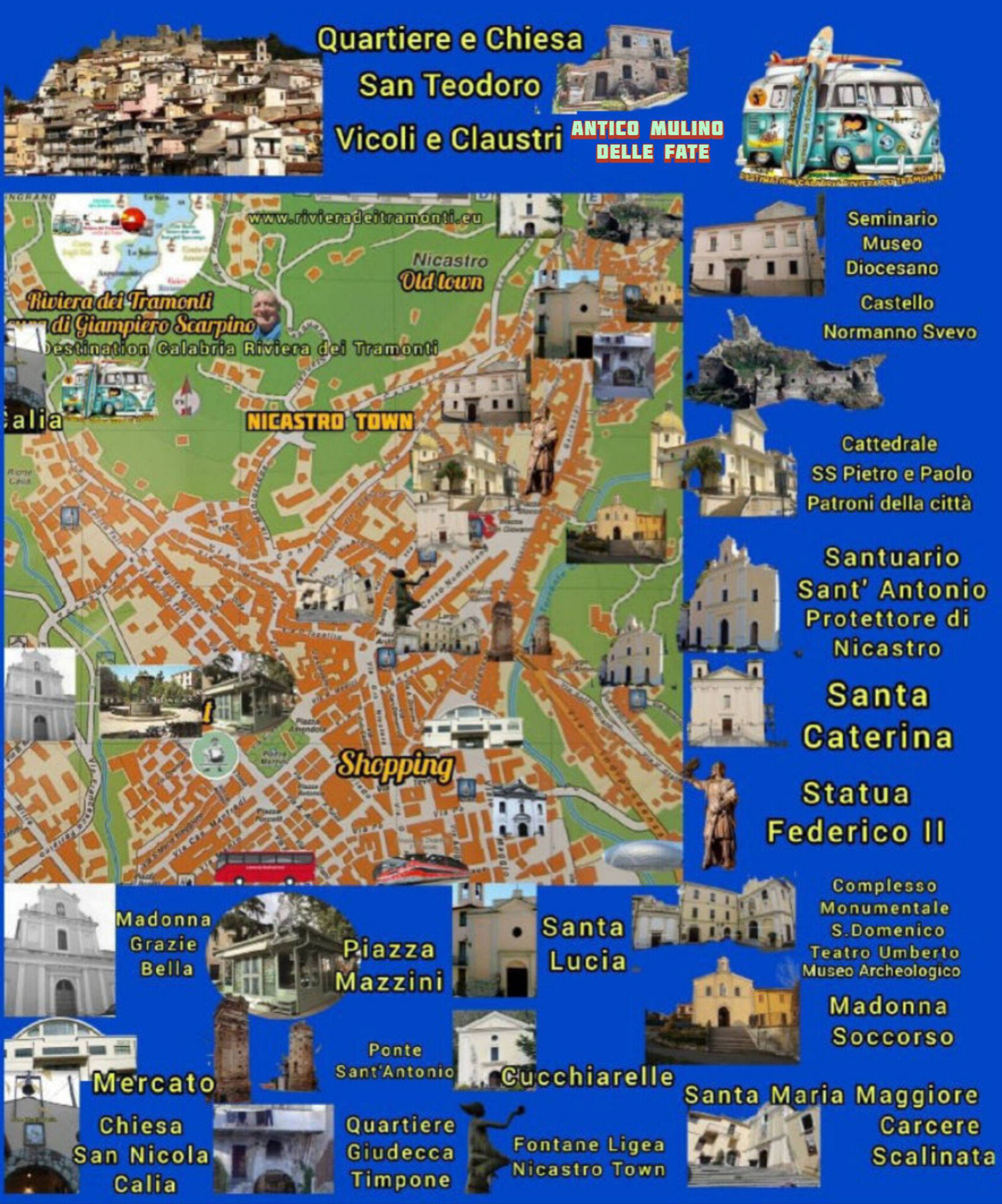
CATTEDRALE SAN PIETRO E PAOLO
fu fondata dalla Contessa Eremburga intorno al 1100, in stile normanno, più volte danneggiata dai terremoti, andò completamente distrutta col terremoto del 1639, fu ricostruita ancora più grande, in stile barocco, dal vescovo Gian Tommaso Perrone, con ampliamento dell'edificio, portato a termine nel 1642. All'interno si possono ammirare una pala d'altare nella Cappella del SS. Sacramento rappresentante la cena del Signore ed eseguita dal pittore Francesco Colelli nel 1762 oltre ad una croce processionale del XVIII secolo e a dei busti dorati dei Santi Pietro e Paolo. |
CATHEDRAL OF ST. PETER AND PAU Founded by Countess Eremburga around 1100, the Norman-style cathedral was damaged several times by earthquakes, and completely destroyed in the 1639 earthquake. It was rebuilt even larger in Baroque style by Bishop Gian Tommaso Perrone, with an expansion of the building completed in 1642. Inside, visitors can admire an altarpiece in the Chapel of the Most Holy Sacrament, depicting the Lord's Supper, painted by Francesco Colelli in 1762, as well as an 18th-century processional cross and gilded busts of Saints Peter and Paul. |
| SANTUARIO SANT'ANTONIO La chiesa officiata dai frati minori Cappuccini, ha annesso il Convento costruito dopo il terremoto del 1638. Inizialmente ad una sola navata, conserva all'interno, sopra l'altare maggiore una grande tela con la Madonna degli Angeli, San Francesco d'Assisi e Papa Innocenzo III. La chiesa è denominata Santa Maria degli Angeli, in se |
SANCTUARY OF ST. ANTHON The church, officiated by the Capuchin Friars Minor, annexed the convent built after the 1638 earthquake. Originally with a single nave, above the high altar, it houses a large canvas of the Madonna degli Angeli, Saint Francis of Assisi, and Pope Innocent III. The church is called Santa Maria degli Angeli, and a nave was later built as a chapel, dedicated to Saint Anthony of Padua. Of notable value is the divine painting of Saint Anthony, dated 1664, by the painter Giacomo Stefanone. In the nave dedicated to Saint Anthony is a painting by Andrea Cefaly depicting the Immaculate Virgin. |
| CHIESA DI SANTA MARIA MAGGIORE (detta di San Francesco) l'antico monastero dei Frati Minori riformati dedicato a San Francesco fu fondato nel 1240. Distrutto dal terremoto del 1638 venne poi ricostruito per volere dei Principi d'Aquino. La chiesa è a due navate, con la Cappella del Santissimo nella navata laterale. Il soffitto è a volte a botte. L'asse della volta è arricchito da due affreschi riferiti ad episodi della vita di San Francesco. L'Abside è sormontato da una cupola a tutto sesto. Il prospetto dell'altare maggiore, reca al centro un tempietto e quattro colonne corinzie che delineano cinque nicchie occupate lateralmente dalle statue di due angeli, dalla statua di Santa Chiara e Santa Rosa da Viterbo che fanno corona alla statua della Madonna Assunta o Madonna degli Angeli al centro. Nel punto più alto dell'altare maggiore è collocato lo stemma dell'Ordine Francescano, sormontato da una croce. Oltre alla chiesa parrocchiale vi è una cappella dedicata a San Nicola, nel rione Calia un rione molto suggestivo da dve partono le escursioni per Platania e Panetti con magnifici paesaggi e stupende cascate. |
CHURCH OF SANTA MARIA MAGGIORE (known as San Francesco) the ancient monastery of the Reformed Friars Minor dedicated to Saint Francis was founded in 1240. Destroyed by the 1638 earthquake, it was later rebuilt at the behest of the Princes of Aquinas. The church has two naves, with the Chapel of the Blessed Sacrament in the side nave. The ceiling is barrel-vaulted. The axis of the vault is enriched by two frescoes depicting episodes from the life of Saint Francis. The apse is surmounted by a round-headed dome. The façade of the high altar features a small temple in the center and four Corinthian columns delineating five niches. These are flanked by statues of two angels, a statue of Saint Clare and Saint Rose of Viterbo, which surround the statue of the Assumption of the Virgin Mary, or Madonna degli Angeli, in the center. At the highest point of the high altar is the coat of arms of the Franciscan Order, surmounted by a cross. In addition to the parish church, there is a chapel dedicated to Saint Nicholas in the Calia district, a very picturesque area from which excursions to Platania and Panetti depart, offering magnificent landscapes and stunning waterfalls. |
| CHIESA DI SAN DOMENICO conserva numerosi affreschi ed il quadro di SAN DOMENICO, che ha una cornice barocca ad intaglio dorata del 1647. Vi è inoltre un ostensorio in argento fuso e sbalzato, databile alla prima metà dell'Ottocento. Di notevole pregio è l'organo del Settecento, in legno con decorazione dorata. Di pregevole fattura, tra la prima e la seconda arcata, si può ammirare la Grotta della Madonna di Lourdes mentre di fronte vi è un altarino dedicato al SS.Ecce Homo con una statua molto suggestiva e toccante.Molto bella la facciata della Chiesa che fa da cornice all'omonima piazza molto frequentata dai Nicastresi. |
CHURCH OF SAN DOMENICO it preserves numerous frescoes and the painting of SAINT DOMENICO, which has a baroque frame with gilded carvings from 1647. There is also a monstrance in cast and embossed silver, dating back to the first half of the 19th century. Of notable value is the 18th-century wooden organ with gilded decoration. Of exquisite workmanship, between the first and second arches, you can admire the Grotto of Our Lady of Lourdes, while opposite is a small altar dedicated to the Most Holy Ecce Homo with a very evocative and touching statue. The church's façade is very beautiful, framing the square of the same name, a popular destination for the people of Nicastre. |
|
TEATRO GRANDINETTI
costruito a partire dal 1935 dall'imprenditore Francesco Grandinetti, il teatro venne inaugurato il 6 gennaio 1946.Il Teatro è stato ristrutturato nel 2010 ed acquisito dal Comune di Lamezia Terme. MUSEO DIOCESANO ha sede nel palazzo del Seminario Vescovile e custodisce oggetti d'arte sacra. Il pezzo più importante nonché il più antico della collezione che vi è all'interno un "cofanetto" in avorio dipinto del XII secolo ed in più le sculture in marmo del XVI-XVII secolo e le opere pittoriche di matrice barocca. MUSEO ARCHEOLOGICO LAMETINO inaugurato nel luglio 1997 è il risultato dell'impegno ventennale da parte dell'Associazione Archeologia Lametina. II Museo occupa il piano terra ed il primo piano di un edifico del centro storico, in Via Garibaldi ed è suddiviso in tre sezioni: Preistoria, Età Classica, Medioevo. |
THEATRO GRANDINETTI: Construction began in 1935 by the entrepreneur
Francesco Grandinetti, and the theater was inaugurated on January 6, 1946. The
theater was renovated in 2010 and acquired by the Municipality of Lamezia Terme. DIOCESAN MUSEUM: Located
in the Episcopal Seminary building,
it houses sacred art objects. The
most important and oldest piece in
the collection is a 12th-century
painted ivory "casket," as well as
16th-17th-century marble sculptures
and Baroque paintings. LAMETINO ARCHAEOLOGICAL MUSEUM: Inaugurated in July 1997, it is the result
of twenty years of dedication by the Lametina Archaeological Association. The
museum occupies the ground and first floors of a building in the historic
center, on Via Garibaldi, and is divided into three sections: Prehistory,
Classical Age, and the Middle Ages. |
| CHIESA SANTA CATERINA non si conosce la data di fondazione della chiesa, le fonti riportano soltanto che l'edificio fu sede della Confraternita dell'Immacolata e che fu ampliato alla fine del XVI secolo, periodo in cui furono aggiunte le due cappelle laterali. |
CHURCH OF SANTA CATERINA
The date of the church's foundation is unknown;
sources only report that the building was home to the Confraternity of the
Immaculate Conception and that it was expanded at the end of the 16th century,
when the two side chapels were added. |
|
CASTELLO NORMANNO SVEVO Fu costruito da Federico Il e a quel tempo vi fece imprigionare il figlio ribelle Enrico VII di Svezia. Domina dal quartiere di San Teodoro su tutta la Piana Lametina ma la struttura è ad oggi priva di elementi importanti in seguito al terremoto che colpì Nicastro nel 1609. nella stia lunga vita fu adibito a fabbrica per mano della famiglia D'Aquino e successivamente in carcere. Ma fu il secondo sisma a danneggiarlo ancor di più. La sua lunga storia è testimoniata dagli scavi archeologici realizzati nell'ambito di un programma di recupero che hanno riscoperto vestigia appartenenti ad epoche diverse. CHIESA DI SAN TEODORO non si conosce la data di fondazione, anche se è attestata nei documenti a partire dal 1511, presenta un orologio del 1840, collocato sul campanile, sembra sia l'unico di questo tipo ancora funzionante. Al suo interno si può apprezzare un organo del 1600 el'altare maggiore costruito in stile barocco datato 1861; |
NORMAN-SWABIAN CASTLE Built by Frederick II, he imprisoned his rebellious son, Henry VII of Sweden, there. It dominates the entire Lamezia Terme plain from the San Teodoro district, but the structure is currently missing important elements following the earthquake that struck Nicastro in 1609. During its long life, it was used as a factory by the D'Aquino family and later as a prison. However, the second earthquake damaged it even further. Its long history is evidenced by archaeological excavations carried out as part of a restoration program, which have uncovered remains from various eras. CHURCH OF SAN TEODORO The date of its foundation is unknown, although it is documented starting in 1511. It features a clock from 1840, located on the bell tower; it appears to be the only one of its kind still in working order. Inside, you can admire a 17th-century organ and the high altar, built in Baroque style and dating to 1861; |
|
BIBLIOTECA COMUNALE ORESTE BORRELLO ORARI APERTURA DAL LUNEDI' AL VENERDI' DALLE 9.30 ALLE 13 E DALLE 15 ALLE 19 SANTUARIO DELLA MADONNA DEL SOCCORSO o della MADONNA DEL MANGANELLO la devozione alla Madonna sotto questo titolo, trae origine da una antica lauda popolare che parla del ritrovamento in contrada Magolà di un quadro della Madonna lasciato dai francesi in epoca assai remota, e collocato in una iona. La chiesa della Madonna del Soccorso, fu costruita nel 1740, all'interno vi è una bella statua lignea della Madonna che ha in braccio il Bambino e, tenendo legato il demonio, protegge una bimba che si aggrappa alla sua veste.All'interno sovrasta la navata centrale una bvellissima copia del Crocefisso di san Damiano,il crocefisso che parlò a san Francesco. Dalla scalinata della Chiesa si può ammirare tutta la piana di Lamezia Terme,San Teodoro,il mare,le serre,le Isole Eolie nelle giornate più limpide ed ogni sera bellissimi tramonti sul mare. |
ORESTE BORRELLO MUNICIPAL LIBRARY OPENING HOUR
MONDAY TO FRIDAY 9:30
AM TO 1 PM AND 3:00 PM TO 7:00 PM
|
|
CHIESA DELLA VETERANA O MADONNA DELLE CUCCHIARELLE
la fondazione della chiesa è legata ad un'antica leggenda, secondo la quale la Madonna delle Grazie apparve in sogno ad una figlia di Federico II dicendole che aveva il desiderio di vedere edificata una chiesetta sul colle di fronte al castello. È chiamata veterana perché dopo la distruzione della Cattedrale è la chiesa più antica di Nicastro. Da rilevare al suo interno una tela raffigurante la Madonna con ai suoi piedi la principessa della leggenda. Vi era inoltre un'opera di grande valore eseguita da Francesco Colelli, solo che è stata trafugata e il pittore Giorgio Pinna l'ha riprodotta e collocata al posto dell'originale.
CHIESA SAN GIUSEPPE ARTIGIANO
Chiesa di San Giuseppe Artigiano: la chiesa dedicata a San Giuseppe Artigiano, è ampia, luminosa ed accogliente. Nell'abside (opera del pittore lametino Maurizio Carnevali) è rappresentata la gloria del santo, le vetrate colorate raccontano la storia biblica di Giuseppe. È stata consacrata il 1 maggio 1998 e affidata alla Congregazione dei Salesiani di Don Bosco che si sono insediati il 13 settembre dello stesso anno. SANTUARIO DELLA MADONNA DELLA SPINA località BELLA la tradizione vuole che un contadino, andando nel bosco a fare legna, ebbe la visione di una "donna bellissima" che lo invitava a roncare lo spineto che si conserva ancora appoggiato al muro della chiesa della Spina. Eseguito l'ordine, l'uomo vide comparire un dipinto parietale che raffigurava una Madonna con Bambino. Avendo fatto quanto richiesto, la signora gli fece dono di una moneta d'oro con la quale per più settimane provvide alle necessità della famiglia. In seguito all'evento miracoloso in quel sito si costruì una chiesetta, intitolata a Santa Maria detta la Bella; |
CHURCH OF THE VETERANA OR MADONNA DELLE CUCCHIARELLE the church's foundation is linked to an ancient legend, according to which Our Lady of Graces appeared in a dream to a daughter of Frederick II, telling her that she wished to see a small church built on the hill facing the castle. It is called "veteran" because, following the destruction of the Cathedral, it is the oldest church in Nicastro. Noteworthy inside is a canvas depicting the Madonna with the legendary princess at her feet. There was also a valuable work by Francesco Colelli, but it was stolen and reproduced by the painter Giorgio Pinna and placed in the original's place. CHURCH SAN GIUSEPPE ARTIGIANO
Dedicated to
San Giuseppe Artigiano, the church is spacious, bright, and welcoming. The apse
(the work of the Lamezia Terme painter Maurizio Carnevali) depicts the glory of
the saint, while the stained-glass windows tell the biblical story of Joseph. It
was consecrated on May 1, 1998, and entrusted to the Congregation of the
Salesians of Don Bosco, who took office on September 13 of the same year. The
church is currently a place of prayer for the Dehonian Fathers. Tradition has it that a farmer, going into the woods to collect firewood, had a vision of a "beautiful woman" who urged him to cut down the thorn bush that still stands against the wall of the Church of the Spina. Having carried out her order, the man saw a wall painting appear depicting a Madonna and Child. Having complied with his request, the lady gave him a gold coin, which he used to provide for the family's needs for several weeks. Following the miraculous event, a small church was built on that site, dedicated to Santa Maria, known as the Beautiful; |
|
AREA ARCHEOLOGICA DI TERINA: antica città nell'area di Sant'Eufemia Vetere scoperta in seguito agli scavi tra il 1997 e il 2002. E' testimonianza di una vera e propria rea urbana organizzata grazie al ritrovamento di strutture abitative ma soprattutto di monete, pesi da telaio ed una particolare laminetta bronzea incisa con la firma del Demiurgo ovvero il giudice di quell'epoca. Le campagne di scavi del sito archeologico sono state condotte dalla soprintendenza per i Beni Archeologici della Calabria in collaborazione con l'Associazione Archeologica Lametina.
ABBAZIA BENEDETTINA, di cui oggi restano soltanto poche tracce, fu fondata intorno al 1062/65 sui resti di un antico monastero bizantino dedicato a Sant'Eufemia. Vanta il primato di essere stata le prima abbazia fondata dai Normanni in Calabria da Roberto il Guiscardo sui resti di un antichissimo monastero bizantino. Le tracce che ancora rimangono hanno evidenziato che la struttura era composta da 3 navate, un transetto che termina in un'abside centrale e due absidi laterali. Luogo di controllo e centro della politica religiosa, economica e del territorio nella carta di fondazione dell'abbazia lo stesso Roberto il Guiscardo dichiara che metà di Nicastro, il Castello e il territorio di Maida e Martirano sono assoggettati alla sua giurisdizione. Fu il terremoto del 1638 a contribuire alla sua distruzione e il conseguente passaggio della giurisdizione all'ordine dell'ospedale di San Giovanni successivamente Ordine dei cavalieri di Malta (1529).
ABBAZIA BENEDETTINA VISITA IL SITO |
TERINA ARCHAEOLOGICAL AREA An ancient city in the Sant'Eufemia Vetere area, discovered during excavations between 1997 and 2002. It bears witness to a fully-organized urban area, thanks to the discovery of residential structures, but above all, coins, loom weights, and a unique bronze plaque engraved with the signature of the Demiurge, the judge of that era. The excavation campaigns at the archaeological site were conducted by the Superintendency for Archaeological Heritage of Calabria in collaboration with the Lametina Archaeological Association. BENEDICTINE ABBEY of which only a few traces remain today, was
founded around 1062/65 on the ruins of an ancient Byzantine monastery dedicated
to Saint Euphemia. It boasts the distinction of having been the first abbey
founded by the Normans in Calabria by Robert Guiscard on the ruins of an ancient
Byzantine monastery. The traces that still remain have highlighted that the
structure was composed of 3 naves, a transept ending in a central apse and two
lateral apses. A place of control and centre of religious, economic and
territorial politics, in the abbey's founding charter Robert Guiscard himself
declared that half of Nicastro, the Castle and the territory of Maida and
Martirano were subject to his jurisdiction. It was the earthquake of 1638 that
contributed to its destruction and the consequent transfer of jurisdiction to
the order of the hospital of San Giovanni, later the Order of the Knights of
Malta (1529). BENEDICTINE ABBEY VISIT THE WEBSITE An imposing defense tower built around 1550 and still in excellent condition. Owned by the Order of St. Euphemia in Jerusalem, it stood on the fiefdom of the Knights of Malta. Its construction was commissioned by the Viceroy of Naples, Don Pietro di Toledo, along with other coastal towers, for observation and later defense purposes: this is why it was equipped with war machines. Its original structure also included a moat that ran alongside the bastion itself, accessible via a drawbridge. CARONTE THERMAL BATHS sulphurous, sulphate, alkaline, earthy, iodine, arsenical waters that flow at 39°C. The characteristic of the Caronte Thermal Waters is due to nature, which has traced an underground mineralization path in the calcareous and crystalline soils above the Sambiase area. The healing properties of the spring waters are particularly suitable for the treatment and prevention of respiratory diseases and ear, nose and throat conditions. The spas have agreements with the health authorities. Outside the thermal park there is the so-called "Gurna di Caronte", a pool with thermal water where it is possible to bathe, frequented by many tourists and locals. They were known by the ancient Bruttians, Greeks, Romans, Byzantines, Normans and the Spanish-French. The Caronte thermal springs have existed since ancient times, great figures of Italian history and especially of classical and medieval European history, including the Roman emperor Antoninus Pius, Robert Guiscard, and probably his Brother Ruggero. Archaeologist Paolo Orsi reiterates: "The Sambiase baths were known in ancient times for their health-giving effects, and everything suggests they are identical to the Aquae Angae, which is also mentioned on the beautiful Terinese coinage. The sulphurous waters of the Caronte spring have therapeutic properties suitable for various ailments, also due to their ideal temperature, around 39°C, which allows them to be used without any intervention. |